
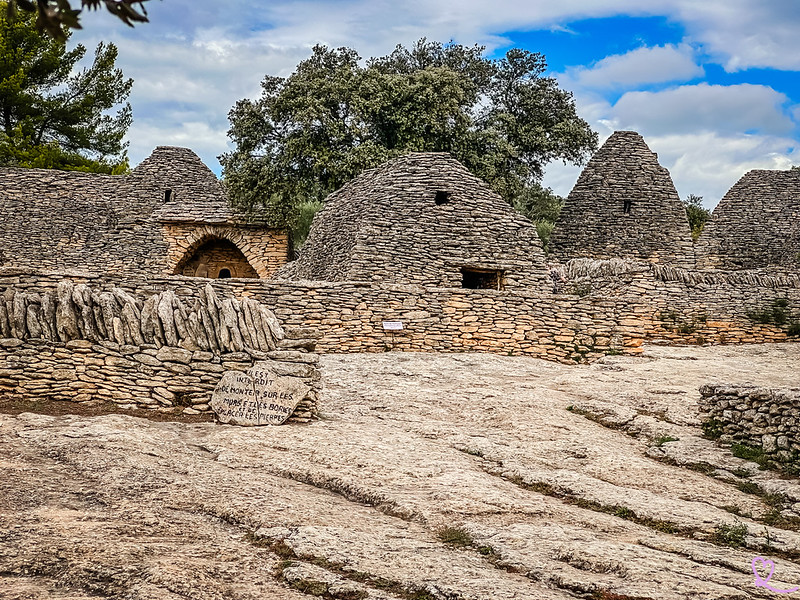
Are you a fan of rural architecture? Le Village des Bories welcomes you to Gordes. We loved this hamlet of dry-stone huts, built without mortar or cement by farmers and shepherds about 300 years ago. Designated a Historic Monument, this museum of rural life chronicles the agricultural life of Provence in days gone by.
In this article, check out our helpful tips with photos to help you plan your visit to the Village des Bories and have a great time!
This guide is completely independent, based on our experiences. We visited the region anonymously, making our own choices and paying our bills in full.
Why visit the Village des Bories?
Is the Village des Bories worth a visit? Our opinion:
Yes, the Village des Bories is worth a visit. It felt like we were wandering through a huge open-air building set, like a giant Lego set made of stones. Sheepfolds, bread ovens, wine vats, and narrow alleys reveal a craftsmanship that has since disappeared.
It’s one of the best things to do in Gordes and the Luberon.

Why is the Village of Les Bories famous?
The Village of Les Bories is famous for being the largest cluster of dry-stone dwellings in the Apt region. Gordes alone is home to more than 400 bories within its boundaries! Designated a Historic Monument in 1977, the site also owes its fame to its exemplary restoration, which was praised by the Academy of Architecture.
And the art of dry-stone construction is also listed as part of UNESCO’s Intangible Cultural Heritage.

Our favorite moments
Here are the three moments that made the biggest impression on us:
- Step inside a borie and look up at the corbelled vault, where each stone is balanced without any mortar.
- Stroll through the hamlet’s narrow streets and courtyards to imagine the daily lives of the farmers and shepherds of yesteryear.
- Have fun stacking stones in the small space set aside for this purpose: kids love it, and so do adults!

WHERE TO STAY IN Lubéron
Our favorites:
In Gordes, a truly exceptional village:
Mas des Romarins Hotel – check photos and availability
Around Mane and Forcalquier:
Couvent des Minimes Hotel – check photos and availability
Around Menerbes, in the heart of the villages:
Bastine de Marie Hotel – check photos and availability

See our selection: Where to Stay in the Luberon
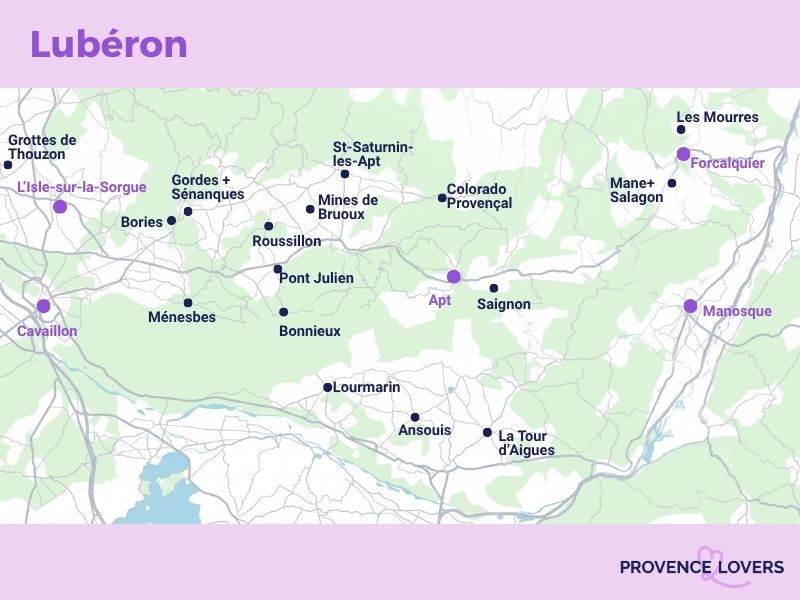
Directions and Map: Village des Bories, Gordes
Where is the Village des Bories located?
- In the town of Gordes, 4 km from the village
- Travel time from downtown Gordes: 10 min,
- Travel time from Cavaillon: 30 min,
- Travel time from Avignon: 50 min,
- Here is a map to help you find your way:
How to get there?
The easiest way to get there is by car, since the site is located in the middle of the countryside, a short distance from the village of Gordes. Please be aware that some sections of the road leading to the parking lot are narrow: drive carefully, especially during peak season when vehicles are passing each other. Please note that RVs and buses are not permitted on this road.

Parking
There is a parking lot nearby for cars, right on the premises.
The ground is made of dirt and gravel.

Buses and RVs must park in a separate parking lot along the D2, 1.7 km from the Village des Bories. The journey then continues on foot: allow about 20 minutes for the walk.

OUR TPS FOR RENTING YOUR CAR IN Provence
- Compare prices on our preferred platform: DiscoverCars – one of the best rated sites.
- Choose a car that is powerful enough (the roads are steep) but compact (some passages are narrow).
- Remember to take outcomprehensive insurance (some roads are winding and narrow).
- There is a lot of demand, book it early.

Useful tips: duration, schedules, eating…
Best time to visit
The site is best explored outdoors, on mineral soil that reflects heat. In the summer, we recommend visiting early in the morning, starting at 9 a.m., or late in the day, when the low-angle light highlights the contours of the stones. In the spring and fall, the milder temperatures make the walk even more enjoyable.

Length of visit and main difficulties
Allow between 30 minutes and 1 hour to explore the village. The ground is uneven, but the route is generally flat, with a few flights of stairs here and there. Restrooms are located in the reception building.
The trail is not stroller-friendly: the site recommends using a baby carrier instead. Wheelchair access is limited to certain parts of the village.

Advice on how to visit
After checking in, let yourself be guided by the narrow streets that connect the different clusters of cabins. We suggest you start with the exhibition spaces at the Museum of Rural Life to learn about dry-stone construction, and then explore the bories, enclosures, and threshing floors.

Visiting with children
Families will enjoy this intimate site, which children can explore as if it were a giant playground. Just remember to bring a baby carrier for the little ones, since the stroller won’t fit.
And a small area lets them have fun stacking stones to understand how the builders put the huts together. And it’s not just for kids!

Schedules and rates
Le Village des Bories is open year-round, except on December 25 and January 1. Last admission is 30 minutes before closing. Here are the timetables:
- March 30 through May 31: 9:00 a.m. – 6:30 p.m.
- June 1–30: through September 30: at least from 9 a.m. to 7 p.m.
- October 1–25: 9:00 a.m. – 6:30 p.m.
- October 26 through November 15: 9:00 a.m. – 5:30 p.m.
- In winter: at least from 10 a.m. to 5 p.m.
- Individual admission prices are as follows: €8 (adults), €4 (students), €4 (ages 12–17). Admission is free for children under 12,
- Latest news on the official website here.
- The tour is self-guided, so you can explore at your own pace
Catering
There are no restaurants on the premises. Picnics are allowed, but only outside the village: be sure to bring a packed lunch and plenty of water in the summer.
A LITTLE MORE patience
All the photos, maps, information, good addresses to make your stay in Provence a success, will soon be gathered in a single ebook!
A dry-stone hamlet overlooking the Luberon
The Village of Les Bories reveals a landscape entirely shaped by human hands. Here, limestone is everywhere: it’s used to build huts, walls, and enclosures.
The Art of Building Without Mortar
We were struck by the precision of these structures, built without cement, lime, or earth. The stones are selected, cut, and then laid flat or at a slight outward angle to prevent water from seeping in. Each row overlaps the previous one slightly: this is the principle behind a corbelled arch, which requires no formwork.

Large, flat slabs placed at the top ensure the stability of the entire structure. Step inside a borie and look up: you’ll quickly understand why the barrel vaults in Gordes are considered the most difficult to construct. We stood there for quite a while, watching this balancing act.

Borie or cabin? A landscape of rocks
While we were there, we learned that the elders didn’t refer to them as “bories” but simply as “huts,” the term that purists still prefer. The word “borie,” which can be used in both masculine and feminine forms, comes from the Provençal word “bori,” which refers to a farmhouse, itself derived from the Medieval Latin “boveria,” meaning “cattle shed.”

Around the huts, take note of the other dry-stone structures: clapas (piles of stones at the edges of fields), restanques (terraces), retaining walls, and enclosures. This modest architectural heritage, built with stones dug up from the ground during land clearing, defines the character of the Gordes hills. We enjoyed interpreting the landscape through these details.


In the Footsteps of the Farmers of Gordes
With no church or cemetery, the hamlet served as a temporary settlement, complementing the permanent village. It bears witness to the agricultural and pastoral activities of countless generations.
Sheepfolds, bread ovens, and wine vats
As you wander through the narrow streets, you’ll come across sheepfolds, bread ovens, wine vats, and threshing floors, all protected by surrounding walls. We stopped in front of the central bread oven: during the restoration, a tree had grown right in the middle of it and cracked its dome.

Don’t miss the small 17th-century house either, whose blind north wall reveals superb stonework. Its facade, which was cracked from top to bottom, required very delicate restoration work. We found that each building represented a daily task, from baking bread to tending the herd.
A rural life shaped by the olive tree
In the 17th and 18th centuries, the cleared plots were used to grow “dry” crops: mulberry trees, almond trees, grains, fodder, and, above all, olive trees. We discovered that olive oil production remained Gordes’ main industry until the great frost of 1956.

Families supplemented their meager incomes by raising small livestock, producing honey, tending orchards, gathering aromatic plants, hunting for truffles, and raising silkworms. Today, the olive groves around the hamlet have been brought back to life: take this opportunity to imagine the countryside of days gone by. We have experienced firsthand how hard it is to work on such barren land.

A Museum of Rural Housing
Beyond its architecture, the Village des Bories is organized as a museum. It provides a better understanding of Gordes’ past and the role of dry-stone construction in the world.
Objects, Tools, and Archives from Gordes of Yesteryear
Inside some of the cabins, we discovered a collection of everyday objects and traditional farming tools from the region, handmade and designed for human use. Archival documents also provide insight into life in Gordes over the centuries. A photography exhibition also showcases various types of dry-stone structures in France and around the world.

Take a moment to compare these ancient structures with the bories around you: you’ll see that the same craftsmanship is evident in a wide variety of forms. We appreciated this introduction, which places the hamlet within a broader historical context.

Restoration of the site
We owe the preservation of the hamlet to Pierre Viala, a poet, writer, actor, and avid traveler, who discovered Gordes in 1956. In 1968, he sold his house to buy these ruins overgrown with brambles. The restoration began in 1969 and lasted eight years, carried out without financial assistance by masons from Gordes. We need to clear the brush, rebuild the walls from the ground up, and gather stones whose patina matches that of the old ones. Take a close look at the ridges and door frames: you’ll have a hard time telling which parts have been restored.

History in brief
Formerly known as “Les Cabanes,” the hamlet has neither a church nor a cemetery: it served as temporary housing for seasonal farm work. Here are the key dates in its history:
- Bronze Age: the emergence of dry-stone construction techniques, which were then passed down for nearly 3,000 years.
- 17th and 18th centuries: Faced with population growth, poor peasants cleared the hillsides. The stones dug out of the ground are used to build walls, terraces, and huts.
- Late 19th century: The hamlet was abandoned. Vegetation is taking over the huts, and the beautiful slate tiles are being looted.
- 1886 and 1909: Two earthquakes struck the site.
- 1956: A severe frost destroyed the olive trees and brought an end to Gordes’s main industry, olive oil production.
- 1968–1969: Pierre Viala, a poet, writer, and actor, purchased the property and began a restoration project that lasted eight years.
- 1977: The site was designated a Historic Monument.
- 1983 or 1984: The town of Gordes became the owner and operator of the site.

EXPLORE the Luberon
- Top Attractions in the Luberon
- Best Villages
- Where to stay
- Gordes: Attractions – Hotels
- Roussillon
- Provençal Colorado

Frequently asked questions
Are dogs allowed at the Village des Bories?
Yes, dogs are allowed on the premises. Be sure to provide water for your pet in the summer, as the stone floor can heat up quickly.
Can we have a picnic at the Village des Bories?
Yes, picnics are allowed, but only off-site. This rule helps preserve the huts and alleyways designated as Historic Monuments.
PLAN YOUR TRIP TO provence
- Inspiration
Best things to do in Provence
Provence’s most beautiful towns
Most beautiful villages
Most beautiful castles
Best destinations

- Practical advice
Rent a car in Provence – in Nice – in Cannes – in Marseille – in Aix-en-Provence.
Itineraries: 5 days – 1 week – 10 days
Weekend Ideas: Best of – Romantic – Luxury – Unique

- Where to stay
Where to stay in Provence
Best luxury hotels

- The must-dos
Best things to do in Marseille
What to do in Aix-en-Provence
Best things to do in Avignon
Best things to do in Arles
Best things to do in Nice
Best things to do in Cannes
Best things to do in Antibes
Best things to do in Monaco
Best things to do in Saint-Tropez
Best things to do in Cassis
Things to Do in the Luberon
Things to Do in the Alpilles



 nos vidéos sur Youtube
 nos photos sur Instagram
 nos actualités sur Linkedin
 formulaire de contact


