
La Ciotat, a port on France’s Mediterranean coast between Marseille and Toulon, looks different in winter. We particularly appreciate this season for exploring the city without the pressure of the high summer season: the narrow streets, the old port and the creeks are revealed in a quieter, truer atmosphere. Here are our tips for visiting La Ciotat in winter: activities, weather, temperatures… Plus, information for spending Christmas or New Year’s Eve in this town full of surprises!
This guide is completely independent, based on our experiences. We visited the region anonymously, making our own choices and paying our bills in full.
Visiting La Ciotat in winter: is it worth it?
Our review
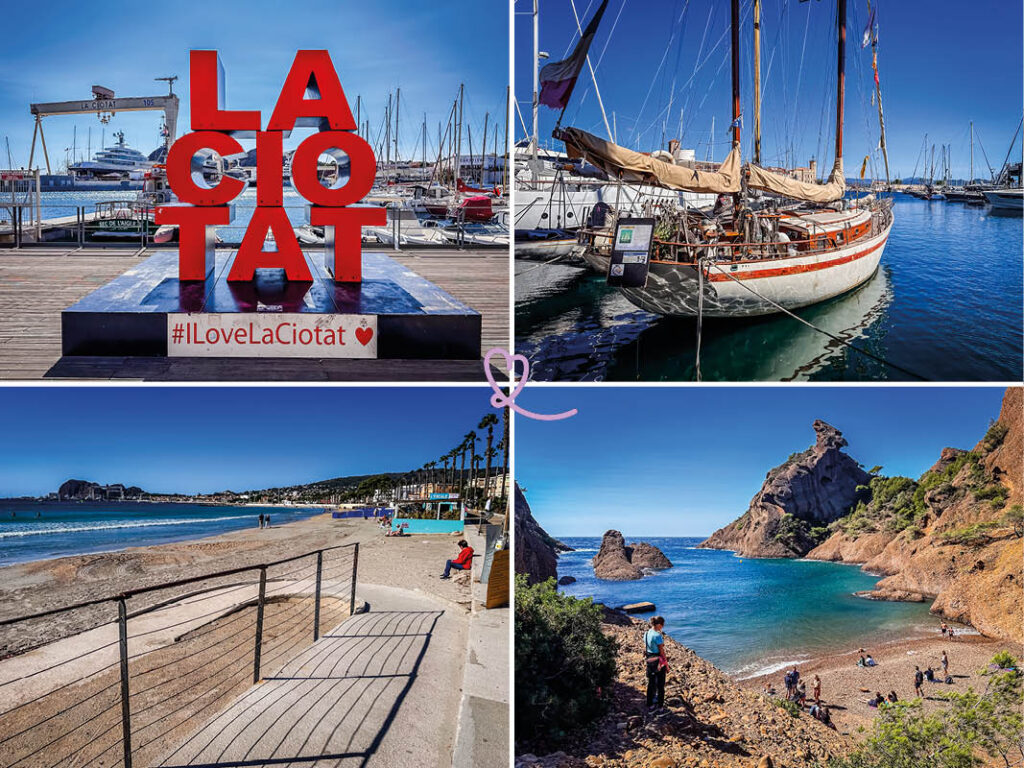
Yes, visiting La Ciotat in winter is well worth the trip. The town retains all its character outside the summer season: the old port, the creeks within walking distance and the museums remain open and much more pleasant to explore without the crowds. We particularly enjoyed strolling along the waterfront promenade on a clear day, with unobstructed views of the bay and Île-Verte in the distance. You can also enjoy the Calanque de Figuerolles in a calm that summer doesn’t allow.
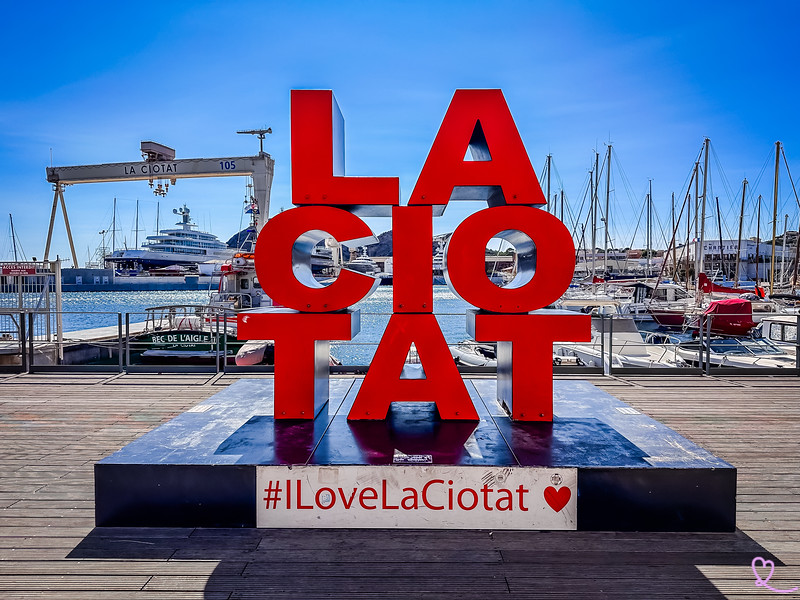
The town remains lively, and its historic links with cinema – Louis Lumière introduced the cinematograph here in 1895 – make it as much a cultural destination as a natural one.
The minimum daytime temperature is around 13°C (55.4°F), can drop to 8°C (46.4°F) and can rise to 17°C (62.6°F).

Benefits
- Fewer people at nature sites and museums
- The calanques and the seafront promenade remain accessible and pleasant.
- Reduced accommodation rates in low season
- Museums, Eden-Theatre and historic sites remain open
- The atmosphere of the old port is more authentic, with a focus on the locals.
- The Route des Crêtes to Cassis is passable and much less busy.
Disadvantages
- For those afraid of the cold, swimming is not an option.
- Water sports activities (kayaking, paddling, diving) are largely suspended.
- Shorter days, less time for exploration
- Winds may pick up, especially at sea and on higher ground
- Shuttle service to Île-Verte completely interrupted in the middle of winter

WHERE TO STAY IN La Ciotat
Option 1: Old port side
Enjoy the charm of the old town, the port and all the restaurants.
We recommend..:
- Best Western Vieux-Port Hotel with rooftop pool – see prices, photos and availability

Option 2: Beach side
With sea views and direct access to beaches. We recommend..:
- Aparthotel A Deux Pas de L’Eau – see prices, photos and availability
- Hotel Rose Thé – prices, pictures and availability


Weather, temperatures and conditions
In winter, La Ciotat enjoys a Mediterranean climate: temperatures remain mild during the day, generally around 13°C (55.4°F). They can drop to 8°C (46.4°F) and rise to 17°C (62.6°C). The mistral can blow strongly, especially on the coast and higher ground such as the Route des Crêtes. Precipitation is possible, but sunny days are frequent. The sea remains cold for swimming, although walks along the seafront and in the calanques are still quite practicable. Take along a windbreaker for outings by the sea or at altitude.
OUR TPS FOR RENTING YOUR CAR IN Provence
- Compare prices on our preferred platform: DiscoverCars – one of the best rated sites.
- Choose a car that is powerful enough (the roads are steep) but compact (some passages are narrow).
- Remember to take outcomprehensive insurance (some roads are winding and narrow).
- There is a lot of demand, book it early.
What to do in La Ciotat in winter?
La Ciotat offers a wide range of winter activities, from the seaside to museums, hiking and historic sites. Here is our selection:
The old port and its pointed boats
The old port remains one of La Ciotat’s most pleasant spots, whatever the season. In winter, we enjoyed a relaxed atmosphere, a far cry from the hustle and bustle of summer. Take a stroll along the quays to see the old riggings, whose history is told on signs, and the famous “pointus” – colorful low boats, traditional fishing craft whose origins date back to the late 19th century. Don’t miss: the equatorial sundial and the statue of the fishing court. See our article dedicated to La Ciotat’s old port.

Calanque de Figuerolles
It’s one of the most remarkable natural sites on the coast between Marseille and Toulon. Accessible on foot from the old port in less than 30 minutes, the Calanque de Figuerolles combines ochre rocks sculpted by erosion with turquoise waters. We fell in love with this landscape. In winter, you’ll discover it without the summer crowds: a considerable advantage. This is one of La Ciotat’s most beautiful beaches.

The seafront promenade and the old town
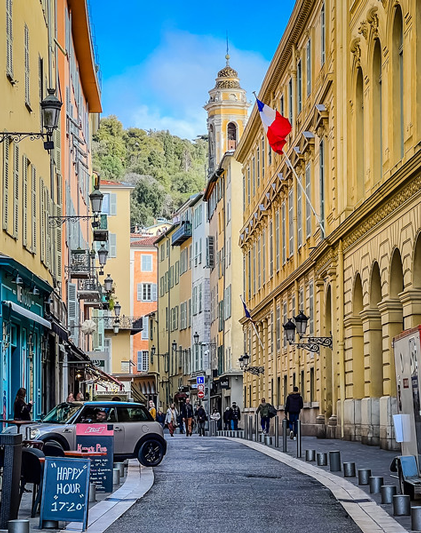
The bay of La Ciotat is ideal for long winter walks. From the seafront, views of Cap de l’Aigle are particularly unobstructed on a clear day. We recommend extending your stroll along the narrow streets of the old town: colorful buildings, discreet chapels, a few boutiques and glimpses of the sea between the facades make for a pleasant itinerary at any time of year.

Le Cinéma Eden-Théâtre
La Ciotat is inextricably linked with the history of cinema. The Eden-Théâtre, built in 1889, is considered the world’s oldest commercial cinema. It was here that Louis Lumière – the French pioneer of photography and cinema – demonstrated the cinematograph in 1895. On March 21, 1899, the first commercial screening attracted 250 spectators. 1.5-hour sightseeing tours are organized on a regular basis. Visit the official website for more info here.

The museums
La Ciotat has two complementary museums, open in winter. The Musée Ciotaden traces the town’s history through 13 rooms: amphorae brought up from the seabed, the history of the Lumière brothers, the first pétanque balls – a sport born here in 1908 – and shipbuilding. In addition, the Maison de la Construction Navale (House of Shipbuilding) provides an insight into 150 years of an industry still active in the town, through techniques, tools and models. See our article dedicated to the Ciotaden Museum.

Calanque de Mugel and the nature park
Less popular than Figuerolles, Calanque de Mugel offers a direct view of Île-Verte. The water is transparent, and the seabed is ideal for observing fish, sea urchins and starfish. The surrounding natural park is ideal for quiet strolls in winter, when the Mediterranean vegetation remains green. We recommend this site to those who wish to combine nature and tranquillity away from the most frequented trails.

The Route des Crêtes and the Grande Arche hike
In winter, the Route des Crêtes between La Ciotat and Cassis can be enjoyed without the summer traffic jams. From its lookouts, views alternate between the bay of La Ciotat and the cliffs overlooking Cassis. Allow 30min for the drive, more if you make stops. Hiking enthusiasts can also walk to the Grande Arche de La Ciotat, also known as the Pont Naturel de Terrevaine: a natural rock formation visible from the road. The route also leads to the Dent du Chat. To make sure you don’t get lost, refer to the AllTrails trail here or join a guided hike.

Notre-Dame-de-l’Assomption church and Notre-Dame-de-la-Garde chapel
The Church of Notre-Dame-de-l’Assomption dominates the harbour and has stood out in the landscape since it was built between 1603 and 1625. Its sober Romanesque architecture contrasts with the three modern biblically-inspired frescoes by a local artist inside – a surprise we recommend. Further away from the quays, the 17th-century Chapelle Notre-Dame-de-la-Garde offers a full view of the bay and Bec de l’Aigle from its promontory. We advise you to get there on foot: the parking lot is tiny and the surrounding area is privately parked. See our article dedicated to the church.

To find out more, read our full article on things to do in La Ciotat!
HAVE FUN WITH THESE activities
- Great kayak trips in:
Saint-Tropez to the Ramatuelle reserve
FromCassis to the Calanques - Helicopter flight from Cannes
- Shuttle service along the coast between Nice and Saint-Tropez
- Bike tours: eBike in Nice – Mountain biking in the Esterel massif

How do I get to La Ciotat?
In winter, the car remains the most practical way to reach La Ciotat and explore the surrounding area. Traffic is much lighter than in summer, and parking is much easier, especially in the marina’s outdoor parking lot or at the more central Parking Le Vieux-Port. The town can also be reached by train from Marseille (approx. 30 minutes) or Toulon, with the station 20-30 minutes away by bus (lines 351 and 352), or a 1-hour walk through areas not well suited to strolling. By car from Marseille, allow around 1 hour via the A50 freeway.
Subscribe to our Newsletter
- Get away from it all with Region Lovers’ beautiful destinations!
- Once a month
- Advertising-free
Christmas in La Ciotat
In December, La Ciotat comes alive for the festive season. The town is decked out in lights, with family entertainment around the Christmas market. It’s a particularly popular time of year for strolling through the lovingly-decorated streets of the old town. You can also enjoy a special winter program at the Eden-Théâtre, the town’s legendary historic cinema, which fits in perfectly with the festive atmosphere. The port’s restaurants offer seasonal menus, ideal for rounding off a day’s strolling by the sea. A gentle, soothing way to celebrate Christmas, far from the big cities.
New Year’s Eve in La Ciotat
Spending New Year’s Eve in La Ciotat means opting for an intimate seaside setting. We love the idea of ending the year facing the Mediterranean, in a natural setting that promises a breath of fresh air. Restaurants in the Old Port and Old Town offer New Year’s Eve parties to be booked in advance: there’s less to choose from than in the city, which makes it all the more personal. The following day, take advantage of the calm of January 1st for a morning stroll along the seafront or to the Calanque de Figuerolles, a 30-minute walk from the center – an original way to start the New Year.


SHE MADE THE TRIP Claire


 nos vidéos sur Youtube
 nos photos sur Instagram
 nos actualités sur Linkedin
 formulaire de contact


